


Estimating Energy Savings and ROI for LED Retrofits
Quick Answer: Energy savings from an LED retrofit are estimated by comparing the wattage and operating hours of existing lighting to proposed LED retrofits. ROI is then calculated by comparing annual energy and maintenance savings to the total installed project cost, factoring in incentives when available.
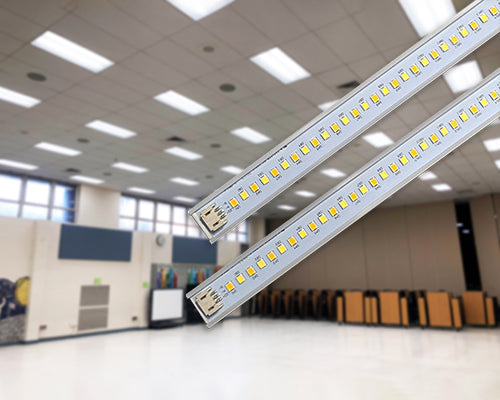
Estimating energy savings and ROI is a critical step in determining whether an LED retrofit makes financial sense. While LED retrofits are widely known for reducing energy and maintenance costs, the actual value of a project depends on how savings are calculated and how they compare to upfront investment.
This guide explains how to estimate energy savings and return on investment (ROI) for LED retrofits, what inputs matter most, and how to interpret savings estimates realistically for commercial facilities.
This page supports our LED Retrofit Lighting: Complete Guide for Commercial Buildings, which covers retrofit strategies across common fixture types and applications.
Table of Contents
What “Energy Savings” Means in LED Retrofit Projects
Step 1: Identify Existing Fixture Wattage
Step 2: Determine LED Retrofit Wattage
What “Energy Savings” Means in LED Retrofit Projects
Quick Answer: Energy savings from LED retrofits means reduced electrical consumption through lower wattage fixtures. When a 128-watt fluorescent fixture is replaced with a 40-watt LED retrofit delivering equal or better light, that 88-watt reduction multiplied by annual operating hours equals your energy savings—typically 50-75% reduction.
Energy savings from LED retrofits come primarily from reduced electrical consumption.
Most retrofit projects replace:
- High-wattage fluorescent systems
- Metal halide or high-pressure sodium fixtures
- Aging ballasts and inefficient lamps
LED retrofits typically consume significantly less wattage while delivering equal or better usable light. The difference in energy use—multiplied by operating hours—forms the foundation of any savings estimate.
Step 1: Identify Existing Fixture Wattage
The first step in estimating energy savings is understanding how much power your current lighting consumes.
This includes:
- Lamp wattage
- Ballast losses (often overlooked in fluorescent and HID systems)
- Number of fixtures
Older systems frequently consume more energy than their labeled lamp wattage suggests, making baseline accuracy important.
Step 2: Determine LED Retrofit Wattage

Next, identify the wattage of the proposed LED retrofit solution.
Retrofit wattage varies based on:
- Fixture type
- Light output requirements
- Optics and distribution
- Dimming or control features
Comparing existing wattage to LED retrofit wattage provides the per-fixture energy reduction.
Step 3: Account for Operating Hours
Operating hours have a major impact on energy savings and ROI.
- High-run-hour facilities (warehouses, manufacturing, parking structures) often see the fastest payback
- Moderate-use spaces benefit from a mix of energy and maintenance savings
- Low-use areas may see slower returns unless maintenance costs are high
Accurate operating-hour estimates are more important than small wattage differences.
Step 4: Estimate Annual Energy Savings
Once wattage reduction and operating hours are known, annual energy savings can be estimated with two formulas:
This estimate provides a planning-level view of potential savings rather than a guarantee.
Energy savings estimate note: Estimated energy savings are intended as a comparative guide to help evaluate retrofit options and understand potential efficiency improvements relative to existing lighting systems.
Step 5: Include Maintenance Savings in ROI Calculations

Energy savings are only part of the ROI picture.
LED retrofits often reduce maintenance costs because:
- LEDs have longer service life
- Fewer lamp and ballast failures occur
- Lift rentals and labor are reduced
Maintenance savings can be especially significant in facilities with high ceilings, outdoor fixtures, or limited access.
Step 6: Factor in Utility Rebates and Incentives
Utility rebates can significantly improve LED retrofit ROI.
Many rebate programs offer incentives based on:
- Wattage reduction
- Fixture count
- Operating hours
- Use of lighting controls
While rebate availability varies by location and program, incentives often shorten payback periods and improve internal approval for retrofit projects.
Step 7: Calculate ROI and Payback Period
ROI and payback are typically expressed as:
- Payback period: How long it takes for savings to equal project cost
- ROI: Annual savings relative to total investment
Projects with high operating hours and maintenance costs often achieve faster payback than those with lower usage.
Understanding the Limits of Savings Estimates
It’s important to understand what energy savings and ROI estimates can—and cannot—tell you.
Savings estimates:
- Help compare retrofit options
- Support budgeting and planning
- Provide directional insight
They do not:
- Guarantee future energy costs
- Account for all site-specific variables
- Replace detailed project analysis
Real-world performance depends on installation quality, usage patterns, and long-term operation.
How Photometric Planning Supports ROI Decisions
Photometric layouts play an indirect but important role in ROI evaluation.
They help:
- Confirm that lower-wattage retrofits meet performance needs
- Avoid over-lighting or under-lighting
- Reduce the risk of post-installation changes
Photometric planning note: Photometric layouts help validate performance assumptions before installation. For customers purchasing lighting through ELEDLights, photometric layouts can be provided at no charge to support informed retrofit planning.
Frequently Asked Questions
How accurate are LED retrofit energy savings estimates?
Savings estimates are planning tools based on known inputs such as wattage and operating hours. Actual results may vary based on usage and site conditions.
Do LED retrofits always deliver positive ROI?
Not always. ROI depends on operating hours, maintenance costs, project cost, and incentives.
Should maintenance savings be included in ROI calculations?
Yes. Maintenance reductions often represent a meaningful portion of total retrofit value.
Do rebates significantly impact ROI?
In many cases, yes. Incentives can shorten payback periods and improve overall project economics.
Next Steps: Estimating LED Retrofit Savings for Your Facility
Estimating energy savings and ROI is an essential step in evaluating LED retrofits. The most reliable assessments consider energy use, maintenance impact, operating hours, and incentives together rather than focusing on a single metric.
Helpful next steps:
Estimating LED retrofit savings often requires balancing technical details with financial considerations. The ELEDLights team can help review existing lighting conditions, operating patterns, and performance goals to recommend retrofit options and support realistic energy savings and ROI evaluation. Request guidance on ROI-focused retrofit planning: Call or text 858.650.9400 or email lights@eledlights.com.